Understanding the Basics: Liquid Paint vs. Powder Coating
Before diving into color-shifting dynamics, it is essential to understand how these two finishing methods differ in application and chemistry.
Liquid Custom Paint Systems
Traditional automotive liquid paint relies on solvent or water-based carriers to spray finely atomized pigment onto a prepared surface. A typical high-end custom paint job involves multiple layers: metal pre-treatment, etching primer, high-build surfacer, a base color coat, specialized pigment/flake layers, and multiple coats of protective polyurethane or urethane clear coat. Liquid systems cure through solvent evaporation and chemical cross-linking at ambient or slightly elevated booth temperatures.
Powder Coating Systems
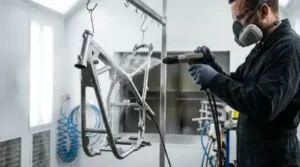
Powder coating is a dry finishing process. Electrostatically charged ground particles made of pigment and resin are sprayed onto a grounded metal component. The part is then placed into a curing oven heated to between 350°F and 400°F (175°C to 204°C). The thermal reaction causes the powder to melt, flow out, and chemically cross-link into a continuous, flexible, and extremely tough polymer skin across the substrate.
The Science of Color-Shift Finishes
Color-shift finishes—often referred to as chameleon, optical-payload, or iridescent coatings—do not rely on traditional light absorption. Instead, they utilize microscopic optical interference flakes coated with materials like titanium dioxide or silica. As light bounces off the different micro-layers within these flakes, light waves bend and reflect at varying angles, creating a shifting color spectrum (e.g., green-to-purple, blue-to-red, or gold-to-bronze).
Liquid Color-Shift Paint
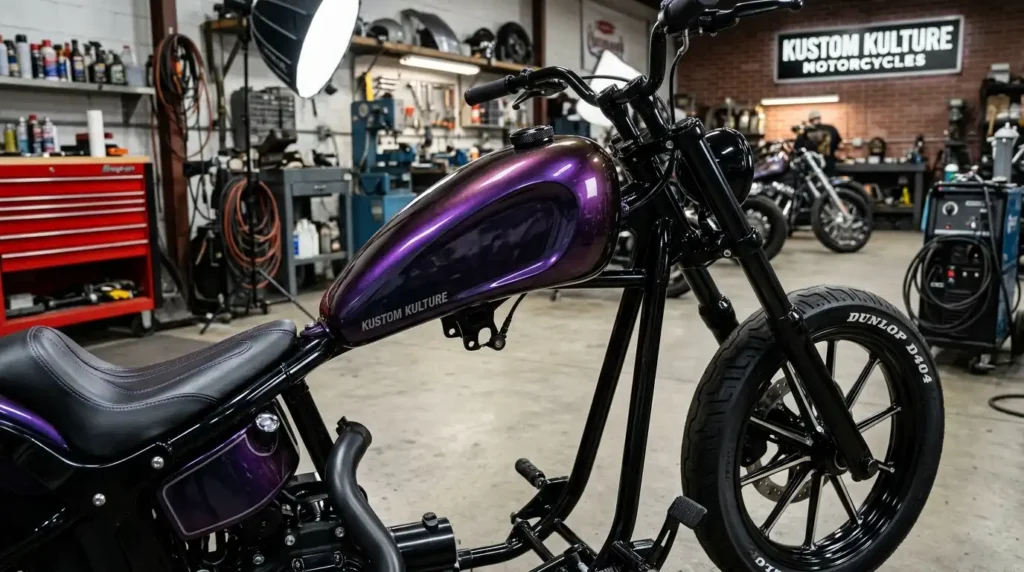
In liquid custom painting, optical shift pigments are suspended in a transparent mid-coat binder and sprayed over a specific base color (almost always deep black). Because liquid spray guns allow fine control over atomization, fan pattern, air pressure, and wet-film thickness, a skilled painter can lay down micro-thin, perfectly flat layers of pearl. When capped with multiple coats of high-solids clear coat, sanded flat, and buffed, liquid paint creates a three-dimensional “glass” effect where the color shift appears to float deep within the finish.
Powder Coat Color-Shift
Powder coat color-shifting powders have evolved drastically. Manufacturers now bond color-shift pigments directly to dry polyester or polyurethane powder resins. When cured, the particles flow together to produce an eye-catching shift effect. However, because powder is applied dry at a significantly higher film thickness per pass than liquid paint, the optical pigments lay down with less directional alignment. While modern color-shift powder coat looks striking in direct sunlight, it generally lacks the extreme optical clarity, razor-sharp reflection, and liquid depth of a wet-sprayed custom finish.
Durability & Resistance: Built for the Open Road
Motorcycles operate in a hostile environment. They are subjected to kicked-up gravel, hot engine oils, fuel spills during fill-ups, constant road vibration, and intense UV exposure.
- Powder Coating Dominates Toughness: Because powder coating bakes into a thick, cross-linked polymer layer, it offers vastly superior resistance to chipping, impact damage, scratching, and chemical corrosion. Components like motorcycle frames, swingarms, triple trees, wheels, and lower fork legs take a beating from road debris, making powder coat the undisputed champion for structural chassis parts.
- Liquid Paint Demands Care: While high-end automotive clears offer excellent UV protection and gloss retention, liquid paint remains thinner and more brittle than baked powder resin. A stone hitting a custom-painted gas tank at 65 mph is significantly more likely to chip the clear coat down to the primer. Additionally, spilled gasoline around the filler neck can damage or soften uncured or lower-grade clear coats if not wiped away immediately.
Aesthetic Flexibility & Craftsmanship
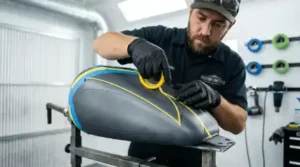 Where liquid paint loses points in raw durability, it overwhelmingly wins in terms of artistic control and customization potential.
If your vision includes complex graphics, airbrushed artwork, crisp tape lines, pinstriping, candy overlays, or multi-tone transitions alongside your color-shift effect, liquid paint is mandatory. Masking off liquid paint between coats is standard practice. Masking off uncured dry powder is exceptionally difficult, and re-heating parts through multiple baking cycles can overbake base layers, leading to poor inter-coat adhesion or discoloration.
Powder coat works best as a single-tone or two-coat clear system across an entire component. If you want a uniform, super-durable chameleon finish on a set of wheels or a frame, powder coat shines. If you want subtle color-shifting flames on a gas tank, liquid paint is your only real choice.
Substrate & Temperature Limitations
The application method dictates what parts of your motorcycle can actually receive the coating:
Substrate Restrictions for Powder Coat: Because powder coating requires baking at temperatures around 400°F and relies on an electrostatic charge, it can only be applied to conductive metal parts (steel, aluminum, magnesium). Fiberglass fairings, ABS plastic body panels, carbon fiber fenders, and parts containing delicate soldered or glued joints cannot survive the oven heat.
Universal Application for Liquid Paint: Liquid paint systems can be applied to almost any stable substrate—steel tanks, aluminum frames, plastic cowlings, carbon fiber components, and composite saddlebags—provided the proper plastic adhesives and primers are used. This allows for seamless color matching across every body panel on the bike.
Summary Comparison: Paint vs. Powder Coat
To help you decide where to spend your budget, here is how the two methods stack up across core categories:
| Feature | Liquid Color-Shift Paint | Color-Shift Powder Coat |
|---|---|---|
| Visual Depth & Clarity | Exceptional; deep 3D reflection | Good; slightly flatter/softer depth |
| Impact & Chip Resistance | Moderate; susceptible to road debris | Extreme; highly resistant to chips |
| Custom Graphics Potential | Unlimited (airbrush, tape lines, multi-color) | Very limited (best for uniform solid coats) |
| Compatible Materials | Metals, plastics, fiberglass, carbon fiber | Conductive metals only (Steel/Aluminum) |
| Ease of Spot Repair | Possible to feather, blend, and re-clear | Difficult; usually requires stripping full part |
The Ideal Strategy: The Hybrid Build Approach
Why choose just one when you can leverage the strengths of both? Most top-tier professional custom bike builders utilize a **hybrid approach** to get the best performance and aesthetics out of a build:
- Powder Coat the High-Wear Structural Parts: Use heavy-duty color-shift or solid black/metallic powder coating on the frame, swingarm, wheels, lower fork legs, subframe, and engine brackets. These parts take direct impacts from rocks, sand, and boots, where powder’s extreme durability keeps the bike looking fresh.
- Liquid Paint the Focal Points: Reserve liquid color-shift paint systems for the gas tank, oil tank, front fender, rear tail section, and fairings. This grants maximum optical depth, perfect clarity, and unlimited freedom for custom graphics where everyone looks first.
Final Verdict
Choosing between color-shift paint and powder coat ultimately comes down to the specific part you are finishing and how you plan to ride your motorcycle. If you are building a daily-driven machine where durability against road wear is paramount, a high-quality color-shift powder coat offers fantastic visual pop with industrial toughness. However, if your goal is an uncompromised, head-turning finish with deep optical reflection, razor-sharp graphics, and flawless gloss on your bodywork, wet liquid paint remains the undisputed king of custom finishes.